

Equity Release Adviser in Waltham Abbey: Your home may represent years of work, security and personal history. In later life, it may also become part of your financial planning.
An equity release adviser in Waltham Abbey can help you examine whether using some of your property wealth is suitable. The role of the adviser is not simply to find a product. It is to understand why you need the money, assess the long-term effects and consider whether another solution may work better.
Connect Lifetime Mortgages provides regulated advice for homeowners in Waltham Abbey and nearby parts of Essex and Hertfordshire.
At a Glance
- Equity release is generally available to eligible homeowners aged 55 or over.
- A lifetime mortgage is the most common form of equity release.
- The loan is secured against your home.
- Interest may be paid, partly paid or added to the balance.
- The arrangement can affect your estate, inheritance and future choices.
- An adviser should assess alternatives before recommending a product.
- Eligibility and available borrowing depend on the applicants and property.
- Regulated advice is required before proceeding.
What Does an Equity Release Adviser Do?
An equity release adviser assesses your circumstances before recommending whether equity release may be suitable.
The review should cover:
- Your age and health.
- Your property value and condition.
- Any existing mortgage or secured borrowing.
- Your income and regular expenditure.
- The amount you want to raise.
- How you intend to use the money.
- Your plans for moving or remaining at home.
- The potential effect on inheritance.
- Your entitlement to means-tested benefits.
- Other ways of meeting the same objective.
Good advice connects today’s need with tomorrow’s consequences. Releasing money may solve an immediate problem, but the decision should also remain workable over the years ahead.
You can learn more about the wider product category in our guide to equity release.
How Might a Lifetime Mortgage Work?
A lifetime mortgage is a loan secured against your home. You normally remain the legal owner of the property.
Depending on the product, you may:
- Take one tax-free lump sum.
- Use a drawdown facility and access money in stages.
- Make voluntary repayments.
- Pay some or all of the monthly interest.
- Allow interest to be added to the loan.
The loan is normally repaid after the last borrower dies, moves permanently into long-term care or sells the property.
Allowing interest to accumulate can increase the balance considerably over time. An adviser should therefore explain both the initial borrowing and the projected future debt.
Read our full explanation of lifetime mortgages before deciding whether this type of borrowing fits your plans.
What Can Affect Eligibility in Waltham Abbey?
Being aged 55 or over does not automatically make every homeowner or property eligible.
A lender may examine:
- The age of the youngest applicant.
- The property’s market value.
- Construction type.
- Property condition.
- Flood, subsidence or environmental risks.
- Lease length for leasehold homes.
- Existing secured debts.
- The amount being requested.
- Whether the home is your main residence.
Some properties require further investigation. These may include flats above commercial premises, listed buildings, unusual construction types or homes with short leases.
Your adviser should identify possible property issues before recommending a lender or product.
How Much Could You Release?
The available amount is usually based on the youngest applicant’s age, the property value and the lender’s criteria.
Older applicants may be offered a higher maximum loan-to-value. Certain health or lifestyle conditions may also affect the amount available through enhanced terms.
However, the highest available amount is not always the right amount to borrow. Taking more than you need can create unnecessary interest and reduce the value remaining in your estate.
A suitable recommendation should therefore begin with your required outcome, rather than the largest possible loan.
Our guide explains how equity release works from initial assessment through to completion.
What Alternatives Should an Adviser Consider?
Equity release should not be assessed in isolation.
Depending on your circumstances, alternatives may include:
- Using savings or investments.
- Downsizing to another property.
- Taking a conventional residential mortgage.
- Applying for a retirement interest-only mortgage.
- Using pension income to support affordable borrowing.
- Seeking help from family.
- Delaying the expenditure.
- Using local or government support for eligible home improvements.
Some alternatives involve monthly payments. Others may require selling assets or moving home. The adviser’s role is to compare the practical and financial consequences of each realistic route.
For broader borrowing choices, visit our guide to later-life lending.
What Are the Main Risks?
Equity release can provide financial flexibility, but it is a long-term commitment.
Important risks include:
- Interest may compound over many years.
- The value left in your estate may reduce.
- Means-tested benefit entitlement could be affected.
- Early repayment charges may apply.
- Moving home could be more complicated.
- A future property may not meet the lender’s criteria.
- Releasing funds now could restrict later borrowing.
- Family expectations about inheritance may need discussion.
Where a product meets Equity Release Council standards, it should include protections such as a no negative equity guarantee. This means the estate should not owe more than the property’s eventual sale value, subject to the plan’s conditions. The guarantee does not prevent interest from reducing the remaining equity.
The Equity Release Advice Process
1. Initial discussion
The adviser asks why you are considering equity release and what you want the money to achieve.
2. Financial assessment
Your income, expenditure, property, existing debts and future plans are reviewed.
3. Alternatives considered
The adviser examines whether another mortgage, downsizing or using other assets may be more appropriate.
4. Product research
Suitable lenders and plans are compared against your stated needs.
5. Personal recommendation
You receive a written recommendation explaining the proposed product, costs, risks and reasons for suitability.
6. Independent legal advice
A solicitor explains the legal obligations before completion.
7. Valuation and underwriting
The lender values the property and checks that it meets its criteria.
8. Completion
Existing secured borrowing is normally repaid first. Any remaining funds are then released in line with the agreed plan.
Local Equity Release Advice Around Waltham Abbey
Advice may be available to homeowners across Waltham Abbey and surrounding locations, including:
- Chingford
- Loughton
- Epping
- Nazeing
- Waltham Cross
- Cheshunt
- Buckhurst Hill
Your adviser does not need to live on the same road to provide useful local support. However, the adviser should understand the property, your household circumstances and the practical reasons behind your enquiry.
Connect Lifetime Mortgages is connected to the wider Connect structure. Its network firm supports advisers through compliance, lender access and specialist mortgage resources. Mortgage professionals can read more about equity release support for mortgage advisers.
Questions to Ask an Equity Release Adviser
Before proceeding, consider asking:
- Are you qualified and authorised to advise on equity release?
- Which product types can you assess?
- How will interest affect the future balance?
- Can I make voluntary repayments?
- What early repayment charges apply?
- Could the plan affect my benefits?
- What happens if I move?
- How could the plan affect my estate?
- Which alternatives have you considered?
- What advice and application fees will I pay?
Clear answers are part of good advice. You should understand not only what is being recommended, but why it is considered suitable.
Speak to an Equity Release Adviser in Waltham Abbey
Equity release can turn part of a property’s value into usable money. However, the value of advice lies in deciding whether that change supports your wider life plans.
An adviser can review your objectives, explain the costs and compare appropriate alternatives before making a recommendation.
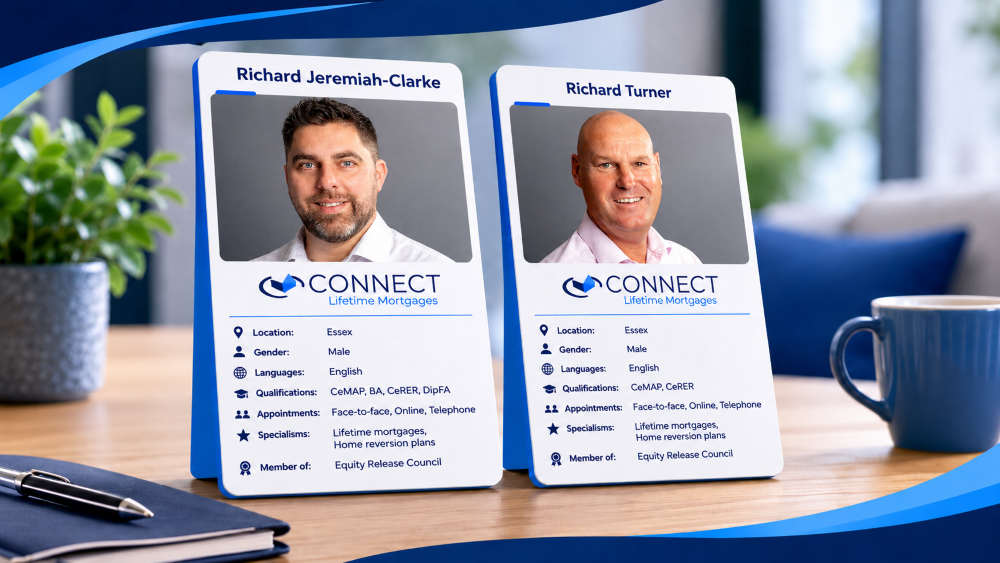
Contact Connect Lifetime Mortgages to arrange a discussion with an equity release adviser serving Waltham Abbey.
Frequently Asked Questions
Do I need an adviser for equity release?
Yes. Equity release is a regulated area, and customers generally need advice before completing a lifetime mortgage. The adviser should assess suitability and explain the risks and alternatives.
Can I remain in my home?
With a lifetime mortgage, you normally retain ownership and can remain in the property, provided you follow the product conditions. These commonly include maintaining the home and keeping it as your main residence.
Can I move after taking equity release?
Many lifetime mortgages may be transferred to another acceptable property. However, the new home must meet the lender’s criteria. Part of the loan may need to be repaid if the new property is worth less.
Will equity release affect my inheritance?
It can. The loan and accumulated interest are normally repaid from the property’s sale proceeds. This may reduce the amount passed to beneficiaries.
Can I repay the interest?
Some plans permit monthly interest payments or voluntary repayments. Product limits and early repayment conditions vary, so these should be checked before applying.
Is equity release suitable for everyone over 55?
No. Age is only one factor. Your objectives, property, finances, benefits, future plans and available alternatives must also be assessed.
Equity release will reduce the value of your estate and may affect your entitlement to means-tested benefits. A lifetime mortgage is secured against your home.