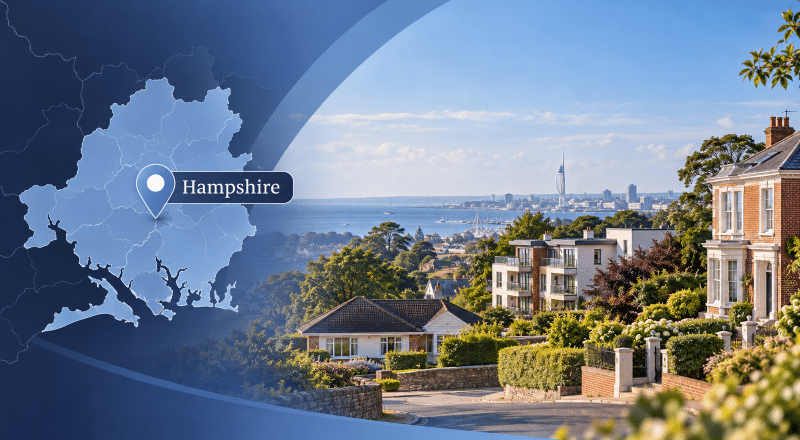

Equity Release Advisers in Dorset: Dorset presents an unusual later-life financial question.
Many homeowners have spent decades building value in their property while their income has shifted from employment to pensions, savings, and retirement income.
Those two figures can move in very different directions.
An equity release adviser in Dorset can help determine whether a home’s value could support a sustainable later-life plan, and whether using it is appropriate in the first place.
That second question matters most.
Equity release isn’t simply a calculation of a property’s value. It involves age, borrowing needs, interest, existing mortgages, family plans, inheritance, benefits, future housing needs, and how long the arrangement might remain in place.
Dorset makes that discussion particularly relevant because it has one of England’s older populations. Dorset Council reports that around 31% of its residents are aged 65 or over.
For homeowners considering their options, the purpose of advice should therefore be clear:
Understand what your home could provide now, without losing sight of what it may still need to provide later.
At a Glance: Equity Release Advice in Dorset
- Dorset has a substantial older homeowner population, making later-life lending particularly relevant.
- An equity release adviser should consider the purpose of borrowing before recommending a product.
- A lifetime mortgage is the most common form of equity release.
- Property value helps determine eligibility, but age, property type and lender criteria also matter.
- Interest may compound where repayments are not made.
- Drawdown can potentially reduce unnecessary interest by releasing money in stages.
- Equity release can reduce inheritance and affect entitlement to means-tested benefits.
- Dorset includes coastal, rural, period, leasehold and higher-value properties that may require different lender assessments.
- Downsizing, a conventional mortgage or retirement interest-only borrowing should also be considered where appropriate.
- Regulated advice should establish whether equity release is suitable rather than simply calculate the maximum amount available.
Start with our wider equity release guide if you want to understand the principal product types before considering Dorset-specific advice.
Why Dorset Creates a Different Later-Life Lending Conversation
Age and property wealth meet particularly clearly in Dorset.
Dorset Council’s 2026 ageing research reports that around 31% of the county’s population is aged 65 or over, with a median age of approximately 52.
This matters because decisions involving housing wealth are often made when income, health, family responsibilities and plans for retirement are changing.
Property values add another dimension.
According to the Office for National Statistics, the average house price in the Dorset Council area was approximately £325,000 in July 2026.
Bournemouth, Christchurch and Poole is reported separately. There, the average was approximately £310,000, although detached homes averaged around £551,000.
These figures are averages, not individual valuations.
A coastal apartment in Bournemouth, a detached house outside Wimborne, a period property in Sherborne and a rural home near Dorchester can therefore produce very different lending considerations.
For an equity release adviser, postcode is only the beginning.
What Does an Equity Release Adviser in Dorset Assess?
The amount potentially available is only one part of regulated advice.
A suitable assessment should normally consider:
- The age of the youngest homeowner.
- The current property value.
- Property construction and condition.
- Whether the home is freehold or leasehold.
- Any existing mortgage or secured borrowing.
- The amount of money actually required.
- Why the money is needed.
- Current and expected retirement income.
- Savings and investments.
- Existing debts.
- Means-tested benefits.
- Family and inheritance wishes.
- Whether anyone else lives in the property.
- Future care considerations.
- Whether the homeowner expects to move.
- Potential alternatives to equity release.
The Financial Conduct Authority has previously identified concerns where advice was insufficiently personalised, customer assumptions were not properly challenged or there was inadequate evidence demonstrating why a lifetime mortgage was suitable.
That principle should shape the Dorset advice journey.
A homeowner asking for equity release is not automatically a homeowner who should take equity release.
How Much Equity Could Be Released From a Dorset Home?
There is no single Dorset percentage.
The amount available under a lifetime mortgage usually depends on several factors, including:
Age
Providers normally use the age of the youngest applicant when assessing joint applications.
Generally, the proportion of the property’s value that may be available can increase with age, although provider criteria differ.
Property value
The provider will normally arrange or require a valuation.
Online estimates, estate-agent appraisals and local averages can provide context, but they are not the lender’s final valuation.
Existing borrowing
An existing mortgage or secured loan will normally have to be repaid as part of the equity release transaction.
This means the gross amount released and the amount you can actually spend can differ significantly.
Property criteria
Providers may consider construction, location, condition, flood exposure, acreage, lease terms and whether there are unusual restrictions or commercial elements.
This can be particularly important across Dorset because the county includes rural homes, older buildings, coastal properties, leasehold apartments and properties with land.
Health and lifestyle
Some lifetime mortgage providers may consider certain health or lifestyle information when calculating potential borrowing.
Individual lender rules apply.
An adviser therefore needs to understand the property and the homeowner rather than relying on a county average.
Why Dorset Property Type Can Affect Equity Release
A property can have substantial market value and still require additional underwriting.
That distinction becomes important in a county with Dorset’s housing variety.
An adviser may need to investigate issues such as:
- Non-standard construction.
- Thatched roofs.
- Listed or period properties.
- Properties with significant acreage.
- Annexes or outbuildings.
- Holiday-use restrictions.
- Coastal exposure.
- Lease length.
- Service charges.
- Flood risk.
- Rights of access.
- Commercial use.
- Agricultural restrictions.
None automatically means equity release is unavailable.
However, the provider ultimately decides whether the property offers acceptable security.
This is one reason a generic online calculation can only take the conversation so far.
Lifetime Mortgages: The Main Equity Release Route
A lifetime mortgage is a loan secured against your home.
Unlike selling the property, you normally retain ownership.
The loan is generally repaid when the last borrower dies, permanently enters long-term care or the property is sold, subject to the plan’s conditions.
Depending on the product, funds may be available through:
- A single lump sum.
- An initial release plus a drawdown reserve.
- Regular or occasional withdrawals.
Some plans also allow voluntary repayments.
The precise features matter because two homeowners releasing the same amount could experience very different outcomes depending on interest, repayments and how long the plan continues.
Why Rolled-Up Interest Deserves Particular Attention
Lifetime mortgages often let homeowners make no compulsory monthly payments.
That can be useful where retirement income is limited.
However, no monthly payment does not mean no cost.
If you don’t pay interest, it’s usually added to the outstanding loan.
Interest can then be charged on the increased balance.
This creates compound growth.
For example, the important questions are not simply:
What interest rate applies today?
They also include:
What could the balance look like after 10, 15 or 20 years?
A personalised illustration can demonstrate how the balance could develop over time.
The FCA has highlighted the importance of customers understanding these longer-term consequences rather than focusing only on the immediate benefit of receiving a lump sum.
A powerful decision is one understood in years, not simply in pounds today.
Could Drawdown Be More Appropriate Than One Large Lump Sum?
Sometimes.
A drawdown lifetime mortgage generally provides an initial amount and a reserve from which further money can potentially be taken later.
Interest is normally charged only on money that has actually been withdrawn.
This can be useful when expenditure occurs gradually.
For example, a Dorset homeowner planning adaptations to remain in their home may not need the entire anticipated budget immediately.
Releasing £20,000 now and more later could generate less interest than taking a much larger amount on day one.
However, drawdown is not automatically better.
Homeowners should understand that:
- Minimum withdrawal amounts may apply.
- Later withdrawals may have a different interest rate.
- Product conditions vary.
- A reserve may be subject to provider rules.
- Future needs can change.
The structure should match the money’s purpose.
Dorset’s Older Population Makes Future Flexibility Important
Later life can cover several decades.
Dorset Council’s age profile makes that especially relevant.
Someone taking a lifetime mortgage at 60 could still have many years in which housing, family, health and financial circumstances change.
An adviser should therefore consider questions such as:
- Could you want to move nearer family?
- Could the property become difficult to maintain?
- Might you later prefer a smaller home?
- Could care needs change?
- Will you need further borrowing?
- Do you expect family members to move into the property?
- How important is protecting inheritance?
- Could you afford voluntary interest payments?
A product suitable today should also be considered against reasonable possibilities tomorrow.
For a wider comparison of borrowing beyond equity release, read our guide to later-life lending.
Downsizing Versus Releasing Equity in Dorset
Dorset also presents a practical housing question.
Some homeowners have significant equity but live in a property larger than they now need.
Downsizing may release money without creating lifetime mortgage interest.
It could also reduce maintenance and household costs.
However, downsizing is not merely a spreadsheet exercise.
Moving from a long-held family home may mean leaving neighbours, routines, memories and a familiar community. Suitable smaller properties may also be expensive in some Dorset locations.
The comparison therefore needs both numbers and context.
Consider:
Downsizing may provide
- Capital without taking a lifetime mortgage.
- Lower property running costs.
- A more manageable home.
- An opportunity to move nearer family or services.
Equity release may provide
- The ability to remain in the existing home.
- Access to some property wealth without selling.
- Lump-sum or drawdown options.
- No compulsory monthly repayment with many lifetime mortgages.
Neither route is automatically stronger.
Our guide to downsizing, remortgaging or equity release explains the wider comparison.
What About Home Reversion?
A lifetime mortgage is not the only recognised form of equity release.
A home reversion plan works differently.
Instead of borrowing against the property, a homeowner sells part or all of the home to a provider while retaining the right to remain there under the plan’s terms.
Because ownership of the sold share passes to the provider, the financial and inheritance consequences are different from a lifetime mortgage.
Home reversion represents a much smaller part of the modern equity release market, but the distinction should still be understood.
Could Equity Release Affect Your Estate?
Yes.
A lifetime mortgage normally reduces the value ultimately remaining within an estate because the loan and accumulated interest usually have to be repaid when the property is sold.
How much remains depends on factors including:
- The initial amount borrowed.
- Future withdrawals.
- Interest rates.
- Voluntary repayments.
- How long the plan runs.
- Future property values.
- Fees.
- Any inheritance-protection feature.
No one can know exactly what a home will be worth many years from now.
An adviser can, however, show how the debt could change under the product assumptions.
That helps turn an abstract future consequence into something easier to understand.
Could Equity Release Affect Means-Tested Benefits?
Yes.
Taking money from a property can change a household’s capital or savings position.
This can affect entitlement to some means-tested benefits or support.
The effect depends on personal circumstances, including:
- The amount released.
- Existing savings.
- Income.
- How the money is used.
- How long released funds remain unspent.
- Which benefit is being claimed.
This needs to be considered before the money is released.
It should not appear for the first time in the small print after a recommendation has been made.
Can You Move Home With a Lifetime Mortgage?
Many modern lifetime mortgages may be portable to another acceptable property, subject to provider criteria.
That does not mean every future property will qualify.
For example, a homeowner may sell a substantial Dorset house and move to a smaller flat or retirement property.
The provider will need to consider the replacement property.
A partial repayment may sometimes be required where the new home provides less acceptable security or has a lower value.
Anyone expecting to move should discuss that intention before taking out a lifetime mortgage.
Flexibility has value only when you understand its conditions.
Higher-Value Homes Across Dorset
Dorset also contains property markets substantially above county averages.
Parts of Poole, including Sandbanks and the surrounding BH13 area, regularly record high-value transactions. Other premium areas can include Canford Cliffs and selected coastal and rural locations.
Higher property value can increase the equity potentially available, but it does not necessarily mean releasing a greater percentage is suitable.
Some property owners may also have complex wealth, investments, company income or other assets that create alternatives to lifetime borrowing.
If the wider requirement concerns substantial or complex conventional mortgage borrowing, clients can explore a High-Net-Worth Mortgage Broker.
Owning a valuable Dorset property does not by itself mean someone meets the regulatory definition of a high-net-worth mortgage customer.
The full financial position still matters.
Independent Schools and Education Finance in Dorset
Property wealth can also create financial questions across generations.
Dorset has a significant independent education presence. For example, Sherborne includes Sherborne Boys, Sherborne Girls, Sherborne Prep, and Leweston.
Families considering school fees should not assume that equity release is the appropriate solution.
Parents or other eligible borrowers may instead need to understand conventional property-backed borrowing and affordability.
Connect Mortgages explains some of those possibilities in its guide to Educational Finance.
Any loan secured against property needs careful consideration of affordability, interest, fees and long-term repayment.
This is a separate financial journey from later-life equity release.
When a Conventional Mortgage May Be More Suitable
Age alone does not mean someone needs a lifetime mortgage.
Some older borrowers can continue to obtain conventional residential borrowing.
Others may qualify for a retirement interest-only mortgage.
These alternatives can sometimes be more appropriate where the borrower has sufficient sustainable income to make monthly payments.
Factors can include:
- Pension income.
- Employment income.
- Rental income.
- Investments.
- Lender age limits.
- Mortgage term.
- Loan size.
- Repayment strategy.
- Affordability.
A homeowner asking an equity release adviser for one product should therefore receive a broader assessment where alternatives are relevant.
Connect’s adviser network also discusses this broader approach to later-life lending opportunities.
The technical principle is simple:
Start with the need. Test the alternatives. Then consider the product.
Finding Mortgage Advice Outside Equity Release
Some Dorset homeowners will discover during the conversation that equity release is not the right route.
They may instead want to remortgage, move home, borrow conventionally or arrange another type of mortgage.
In that situation, Connect Experts can help clients find a Mortgage Broker in Dorset based on location, expertise, and mortgage requirements.
Connect Experts is a directory and matching platform. It does not provide mortgage advice directly. Advice is provided by the adviser or firm selected by the user.
Keeping the two journeys distinct helps avoid turning an equity-release enquiry into a product assumption.
Questions to Ask an Equity Release Adviser in Dorset
Before deciding whether to proceed, consider asking:
- Why do you believe equity release is suitable for me?
- Which alternatives have you considered?
- How much do I actually need to release?
- Could taking less reduce the long-term cost?
- Would drawdown be appropriate?
- What interest rate applies?
- How could the balance change over 10, 15 and 20 years?
- Can I make voluntary repayments?
- Are early repayment charges possible?
- What happens if I move?
- Could my benefits be affected?
- What might happen to my estate?
- Does my property create any restrictions for the lender?
- What fees will I pay?
- What happens if my circumstances change?
Good advice should be easy to understand.
Complexity may be unavoidable.
Confusion should not be.
FAQs: Equity Release Advisers in Dorset
Do I need to use an equity release adviser based physically in Dorset?
No.
An adviser does not necessarily have to live or work in Dorset. Relevant qualifications, regulatory permissions, product knowledge and the ability to understand your circumstances matter more than geographical distance.
Advice may be provided remotely where appropriate.
What age do I need to be for equity release?
Many lifetime mortgage products start from around age 55, although provider criteria vary.
For joint applications, providers normally assess eligibility based on the youngest homeowner’s age.
Does Dorset’s average house price determine how much I can release?
No.
County averages provide context only.
The provider will normally assess your individual property value alongside your age, existing borrowing, property type and its own lending criteria.
Can I release equity from a coastal Dorset property?
Potentially.
Coastal location alone does not prevent equity release. Providers may, however, consider construction, condition, flood risk, erosion exposure, lease arrangements, and property marketability.
Can I release equity from a listed or thatched Dorset home?
Possibly.
Specialist property characteristics can require additional assessment. Eligibility depends on individual provider criteria and the specific property.
Can I use equity release for home improvements?
Potentially.
Home improvements and adaptations are common reasons homeowners consider accessing their property’s value.
An adviser should still assess the amount required, alternatives and long-term cost.
Can equity release repay an existing mortgage?
It can.
An existing mortgage would normally need to be repaid when the lifetime mortgage completes.
The adviser should consider whether replacing conventional debt with borrowing that may compound over many years is suitable.
Can I give released money to my children?
You may be able to use released funds to make gifts.
However, gifting can raise estate-planning, inheritance-tax and deprivation-of-assets considerations depending on circumstances.
Appropriate tax or legal advice may therefore be required.
Will my family inherit less?
Potentially.
A lifetime mortgage and accumulated interest normally reduce the value remaining in the estate.
The precise effect depends on borrowing, interest, repayments, product features and future property value.
Is equity release right for every Dorset homeowner over 55?
No.
Age and property value establish only part of the picture.
Advice should examine need, affordability, alternatives, future plans and long-term consequences before any recommendation is made.
Speak to Equity Release Advisers in Dorset
A home can represent decades of repayments, improvement, memories and accumulated value.
Later life can create reasons to use some of that value.
The important decision is not simply whether the money can be accessed.
It is whether accessing it strengthens the years ahead without creating consequences that were not properly understood.
Equity release advisers in Dorset can review your property, finances, objectives and alternatives before explaining which later-life options may be appropriate.
Speak to Connect Lifetime Mortgages today to arrange an initial conversation about equity release and later-life lending in Dorset.

Important Regulatory Information
Equity release will reduce the value of your estate and may affect your entitlement to means-tested benefits.
A lifetime mortgage is a loan secured against your home. Interest can be added to the loan and compound over time if repayments are not made.
Taking equity from your home is a long-term financial decision. You should understand the costs, risks, product features and alternatives before proceeding.
To understand the features and risks, ask for a personalised illustration.
Connect Lifetime Mortgages is a trading style of Richer Mortgage and Retirement Ltd, an appointed representative of Connect IFA Ltd.
Connect IFA Ltd is authorised and regulated by the Financial Conduct Authority under reference 441505.