
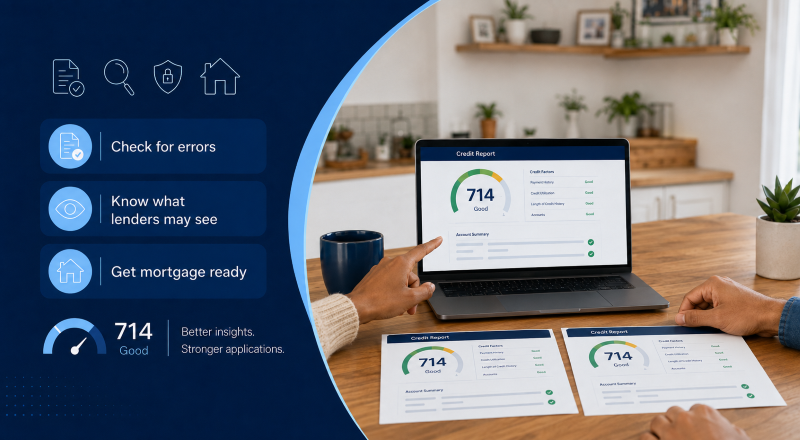
Check Your Credit File Before a Mortgage: Before applying for a mortgage, check your credit file with the main UK credit reference agencies. Look for address errors, missed payments, old financial links, defaults, public records and recent credit searches. A clean file does not guarantee approval, but a clear file can help you prepare properly.
Applying for a mortgage is not only about income and deposit. It is also about how clearly your financial position can be understood.
Your credit file helps lenders review how you have managed credit over time. It may show credit cards, loans, overdrafts, payment history, electoral roll details and public records. It may also show whether you have made several recent credit applications.
That is why checking your credit file before applying matters.
It gives you time to spot errors, understand any issues and prepare your application with care. A mortgage application is a serious financial step. The more you know before you apply, the less likely you are to be surprised later.
What Is a Credit File?
A credit file is a record held by credit reference agencies.
It can include information about your borrowing, repayment history and financial links. Lenders may use this information to help assess whether to offer credit.
In the UK, the three main consumer credit reference agencies are Experian, Equifax and TransUnion. Not every lender uses the same agency, so it can be sensible to review more than one report.
Your credit score can be useful, but the detail behind the score often matters more. A lender may look at what happened, when it happened, how much was involved and whether the issue has been resolved.
What Should You Check First?
Start with your personal details.
Check that your name, date of birth and address history are correct. If you have moved home, make sure your previous addresses are accurate. Lenders often need your address history to match your application.
Then check your electoral roll status. Being registered at your current address can help confirm your identity.
After that, review your accounts. Look at credit cards, loans, overdrafts, mobile contracts and any other credit agreements. Make sure balances, limits and payment records look correct.
You should also check for:
- missed or late payments;
- defaults;
- county court judgments;
- insolvency records;
- old financial links;
- accounts you do not recognise;
- recent hard searches;
- settled accounts still showing as active.
If anything looks wrong, contact the credit reference agency and the company that supplied the information.
Why Timing Matters
It is better to check your file before you need the mortgage.
Some corrections can take time. If you find a mistake one week before applying, it may not be corrected quickly enough. Early checks give you more control.
You should also be careful with new credit applications before applying for a mortgage. Each hard search can leave a footprint on your file. One search may not be a problem, but several in a short period may raise questions for some lenders.
If your credit file shows issues, do not keep applying to different lenders without advice. A mortgage adviser can help you understand which routes may fit your circumstances.
What If Your Credit File Shows Problems?
A credit issue does not always mean you cannot get a mortgage.
The answer depends on the type of issue, how recent it is and whether it has been settled. A missed payment from years ago may be viewed differently from a recent default. A satisfied county court judgment may be viewed differently from one that remains unpaid.
Lenders also assess income, deposit, affordability, property type and the wider application.
The practical step is to understand your position before you apply. You can read more on our Credit File and Mortgages page.
What Documents Should You Prepare?
Alongside your credit reports, you may need:
- payslips or income evidence;
- bank statements;
- proof of deposit;
- identification documents;
- address history;
- details of loans and credit cards;
- notes explaining any past credit issues.
If you are self-employed, you may also need accounts, tax calculations and tax year overviews.
Good preparation can make the advice process clearer. It can also help avoid delays later in the application.
Speak to a Mortgage Adviser
Checking your credit file is not about chasing a perfect score. It is about understanding what a lender may see.
A mortgage adviser can review your wider position and help you prepare before applying. This can be useful if you have changed jobs, moved home, become self-employed or had previous credit issues.
Connect Lifetime Mortgages can help you understand your mortgage options before you apply.

FAQs
Does checking my own credit file hurt my score?
No. Checking your own credit file is a soft check. It does not affect your ability to get credit.
Should I check more than one credit reference agency?
Yes, it can be useful. Different lenders may use different agencies, and the information may not be identical across all reports.
How early should I check my credit file before applying?
It is sensible to check several months before applying. This gives you time to correct errors.
Can I get a mortgage with missed payments?
It may be possible, but it depends on the date, number, value and reason for the missed payments.
Should I apply for new credit before a mortgage?
Avoid unnecessary credit applications before applying for a mortgage. Too many recent hard searches may affect some lender decisions.