

Equity Release Adviser in Felsted: Equity release advice begins with questions, not a product.
An equity release adviser in Felsted should first establish what you need, why you need it and how borrowing may affect your future. The adviser can then assess whether a lifetime mortgage, another later-life mortgage or no new borrowing may be appropriate.
Felsted is a rural parish in north-west Essex, close to Great Dunmow and Braintree. Homeowners across Felsted, Little Dunmow, Flitch Green and nearby CM6 areas can receive advice in person, by telephone or through a secure video appointment.
At a Glance
- Equity release usually involves a lifetime mortgage secured against your home.
- An adviser must assess your objectives, property, income, spending and future plans.
- Downsizing, a standard mortgage and other later-life options should be considered.
- Interest may roll up and increase the amount owed.
- Equity release can reduce your estate and affect means-tested benefits.
- Regulated advice is required before an equity release plan can complete.
What Does an Equity Release Adviser in Felsted Do?
An equity release adviser assesses whether releasing money from your home may be suitable.
This is not simply a search for an available interest rate. The adviser must connect an immediate financial need with its longer-term cost.
Advice normally considers:
- The amount you want to release
- How the money will be used
- Your age and health
- Your property’s estimated value
- Any existing mortgage or secured borrowing
- Your income and regular expenditure
- Your retirement plans
- Your wish to move home later
- The potential effect on your estate
- Possible changes to means-tested benefits
You can read the wider principles on our equity release page.
What Will the Adviser Ask About?
The first conversation should establish a clear purpose for the borrowing.
You may want to repay an existing mortgage, repair your home, adapt it for later life or support a family member. Some homeowners also consider releasing funds to supplement retirement spending.
The intended use matters because different needs may require different solutions.
For example, a single planned expense may support one form of borrowing. A series of future costs may require a different release structure. An adviser should avoid recommending more money than is reasonably required.
The adviser may also ask whether family members know about your plans. The decision remains yours, but a family discussion can help people understand the possible effect on inheritance.
How Is a Felsted Property Assessed?
The property is part of the lender’s security. Its construction, condition, location and estimated value will therefore affect the available options.
A lender may examine:
- Whether the property is your main residence
- Its construction type
- Its current condition
- Its estimated market value
- Any commercial use
- Flooding or environmental factors
- Lease terms for leasehold homes
- Nearby land or buildings that may affect saleability
Living in Felsted does not create an automatic right to equity release. Each lender applies its own property and postcode criteria.
The amount available will also depend on the age of the youngest homeowner and the selected product. A formal valuation is usually completed after an application begins.
Which Alternatives Should Be Considered?
A suitable recommendation should not begin with the assumption that equity release is the answer.
Possible alternatives include:
- Using existing savings
- Downsizing to another property
- Taking a standard residential mortgage
- Considering a retirement interest-only mortgage
- Using pension income where appropriate
- Claiming available benefits
- Receiving family support
- Delaying the planned expenditure
- Releasing a smaller amount
Our guide to later-life lending explains why borrowing in retirement extends beyond equity release.
A professional decision is sometimes a recommendation not to borrow. The adviser’s role is to test the proposed solution rather than confirm an assumption.
How Does a Lifetime Mortgage Work?
A lifetime mortgage is the most common form of equity release.
It is a loan secured against your home. You normally retain ownership and continue living there, subject to the plan’s conditions.
Monthly payments are not always required. However, unpaid interest is generally added to the loan. Interest can then be charged on the original borrowing and earlier interest.
This means the balance can grow over time.
Some plans allow voluntary payments. Others provide a drawdown facility, which lets you take an initial amount and hold further money in reserve. Interest is normally charged only after each amount is released.
Our guide explains how equity release works from the first enquiry to completion.
Which Product Protections Should Be Explained?
Where a product meets the Equity Release Council’s standards, it may include protections such as:
- The right to remain in the property for life, subject to the terms
- A fixed interest rate or a capped variable rate
- The ability to move the plan to a suitable property
- A no negative equity guarantee
- The right to make certain repayments without a charge, subject to lender criteria
These safeguards do not make every plan suitable. Eligibility, costs and restrictions still need to be assessed.
The Equity Release Council’s product standards provide further information about these protections.
What Are the Main Risks?
An adviser should explain the disadvantages as clearly as the potential benefits.
Equity release may:
- Reduce the value of your estate
- Affect the inheritance left to beneficiaries
- Affect entitlement to means-tested benefits
- Include early repayment charges
- Restrict a future move to an unsuitable property
- Cost more when interest rolls up for many years
- Require an existing mortgage to be repaid
- Reduce your available options later
Your solicitor will provide independent legal advice before completion. The solicitor’s role is separate from the adviser’s product recommendation.
How Is Connect Lifetime Connected to Connect Network?
Connect Lifetime Mortgages operates within a wider regulated group structure.
Connect IFA Ltd provides the network framework for appointed representatives. This includes compliance oversight and professional support across mortgage and later-life advice.
The intermediary-facing Connect Brokers website explains how the network supports equity release brokers and later-life cases.
The network relationship provides context about the firm’s regulatory structure. Your personal recommendation must still be based on your circumstances, needs and objectives.
Areas Covered Around Felsted
Advice is available to eligible homeowners in Felsted and surrounding parts of Essex, including:
- Great Dunmow
- Little Dunmow
- Flitch Green
- Braintree
- Stebbing
- Rayne
- Takeley
- Thaxted
- Chelmsford
You do not need to travel to an adviser’s office for every stage. Initial and follow-up meetings may be completed remotely where appropriate.
Questions to Ask an Equity Release Adviser
Before choosing a plan, consider asking:
- Which alternatives have been assessed?
- Why is this product suitable for me?
- How much could the balance become?
- Can I make voluntary repayments?
- What happens if I move home?
- Could the plan affect my benefits?
- What charges apply if I repay early?
- How will the plan affect my estate?
- What happens if I need long-term care?
- Which assumptions appear in the illustration?
Clear advice should leave you able to explain the recommendation in your own words.
Speak to an Equity Release Adviser in Felsted
A home can represent security, memory and financial value. Releasing part of that value may solve an immediate need, but it also changes what remains available later.
That is why advice should examine the whole decision rather than only the amount that can be borrowed.
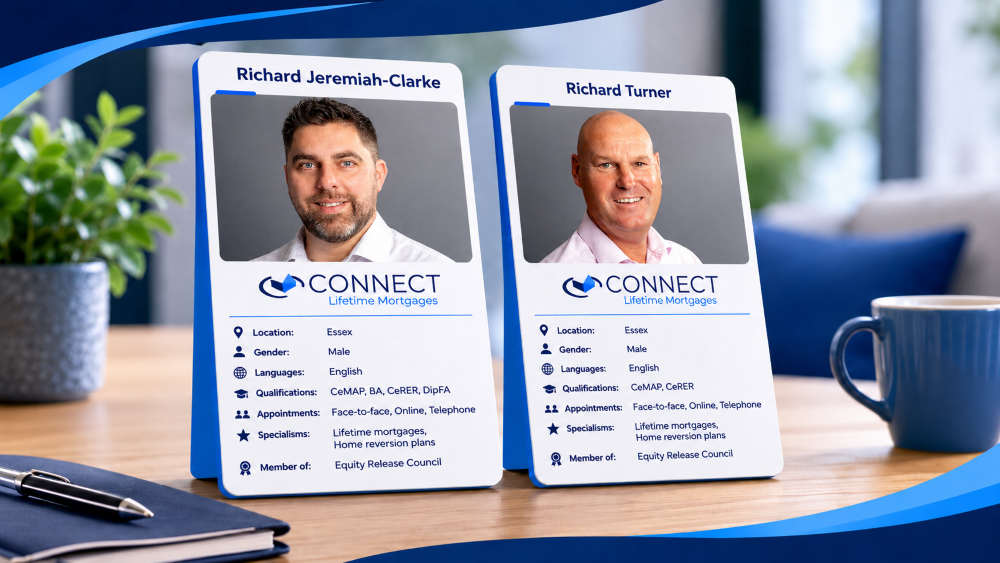
Contact Connect Lifetime Mortgages to arrange an initial conversation about equity release or other later-life mortgage options in Felsted.
Frequently Asked Questions
Can I meet an equity release adviser in Felsted?
Appointments may be available in person, by telephone or through a secure video meeting. The available format can be discussed when you enquire.
Do I need advice before taking equity release?
Yes. Regulated equity release advice is required before an equity release plan can complete.
Is equity release available from age 55?
Many lifetime mortgages have a minimum age of 55. However, age requirements vary by lender and product.
Can I release equity if I still have a mortgage?
You may be able to, but the existing mortgage will normally need to be repaid when the new plan completes.
How much equity can I release?
The amount depends on factors including your age, property value, health, property type and lender criteria.
Will I still own my Felsted home?
With a lifetime mortgage, you normally retain ownership of your home. A home reversion plan works differently because part or all of the property is sold to the provider.
Can equity release affect my inheritance?
Yes. The loan and accumulated interest are normally repaid from the eventual sale of the property. This can reduce the estate left to beneficiaries.
Can I move home after taking equity release?
Many plans may be transferred to another acceptable property. The new property must meet the lender’s criteria, and part of the loan may need to be repaid.
Risk warning
Equity release will reduce the value of your estate and may affect your entitlement to means-tested benefits.
A lifetime mortgage is a loan secured against your home. Compound interest can increase the amount owed.
There may be a fee for mortgage advice. The precise amount will depend on your circumstances and will be confirmed before you choose to proceed.