

A lifetime mortgage may remain in place for many years.
During that time, your housing needs could change. You may want a smaller property, easier access or a home closer to family.
An Equity Release Adviser in Leigh-on-Sea should therefore consider future moving plans before recommending a product.
A suitable plan must work for the home you occupy now. It should also consider where you may live later.
At a Glance
Many lifetime mortgages may be transferred to another suitable property.
However:
- The new property must meet provider criteria
- A partial repayment may be required
- Early repayment charges could apply
- Some property types may not be accepted
- Downsizing protection may help in defined circumstances
- Moving costs still need to be considered
Portability is a product feature, not an automatic approval.
Can You Move After Taking Equity Release?
Many lifetime mortgages are described as portable.
This means the provider may allow the mortgage to transfer to a new property.
The new home must normally provide acceptable security for the loan.
The provider may assess:
- The new property value
- Construction type
- Condition
- Lease length
- Location
- Flood or subsidence exposure
- Title restrictions
- Future resale prospects
Approval is not guaranteed merely because the original product is portable.
What Happens When Downsizing?
Downsizing means moving to a lower-value property.
This may release money and reduce property maintenance. However, it can also affect an existing lifetime mortgage.
The provider will compare the outstanding mortgage balance with the value of the new home.
A partial repayment may be required to bring the borrowing within its permitted loan-to-value limit.
For example, a lifetime mortgage may be acceptable against a £500,000 property but too large against a new home worth £300,000.
The provider may require part of the balance to be repaid before approving the transfer.
Our guide compares downsizing and equity release.
What Is Downsizing Protection?
Some lifetime mortgages include downsizing protection.
This may allow the plan to be repaid without an early repayment charge when the borrower moves to a property the provider will not accept.
Conditions normally apply.
These may include:
- A minimum period since completion
- The move being a genuine downsizing transaction
- The new property failing provider criteria
- Evidence that the property is the borrower’s new main residence
Downsizing protection does not remove the mortgage balance. It may only remove a qualifying early repayment charge.
Which Properties May Be Difficult?
Provider criteria vary.
Some properties may require more investigation, including:
- Short-lease flats
- Retirement properties
- Sheltered accommodation
- Park homes
- Properties with unusual construction
- Homes with large commercial elements
- Properties with title restrictions
- Homes affected by structural concerns
A property that is suitable for a standard residential mortgage may not automatically meet lifetime mortgage criteria.
Could You Repay the Plan and Start Again?
You may be able to repay an existing lifetime mortgage and arrange another plan against the new home.
However, this can involve:
- Early repayment charges
- New advice fees
- Legal costs
- Valuation costs
- Product fees
- Different interest rates
- New lending criteria
A new application would be based on the circumstances and products available at that time.
It should not be assumed that the same amount or product features will remain available.
Should Moving Come Before Equity Release?
Sometimes.
When a homeowner already expects to move, completing the move first may provide a clearer financial position.
The sale could:
- Repay an existing mortgage
- Release money without further borrowing
- Reduce the amount required
- Remove the need for equity release
- Change the appropriate product
However, moving first may not be practical when money is needed to prepare the existing property for sale.
The timing should be considered as part of the advice.
Connect Mortgages provides a separate guide to moving home mortgages where standard mortgage borrowing remains possible.
What Moving Costs Should Be Considered?
Moving home can involve:
- Estate agent fees
- Conveyancing costs
- Survey fees
- Removal costs
- Repairs
- Property improvements
- Mortgage repayment charges
- Stamp Duty Land Tax, where applicable
A lower purchase price does not always mean the move releases as much cash as expected.
The full transaction cost should be calculated before deciding.
What Does the Equity Release Council Require?
Products meeting Equity Release Council standards must allow customers to move their plan to another suitable property, subject to the provider’s criteria.
Council-standard products also include a no negative equity guarantee.
Read the current Equity Release Council product standards before comparing plans.
Questions to Ask Before Proceeding
Ask your adviser:
- Is the product portable?
- Which properties will the provider accept?
- What happens if I move to a cheaper home?
- Could a partial repayment be required?
- Does the plan include downsizing protection?
- When does that protection begin?
- What early repayment charges apply?
- Could I transfer only part of the mortgage?
- What happens if the new property is declined?
- Should I move before releasing equity?
Future possibilities cannot always be predicted. They can still be planned for.
Speak to an Equity Release Adviser in Leigh-on-Sea
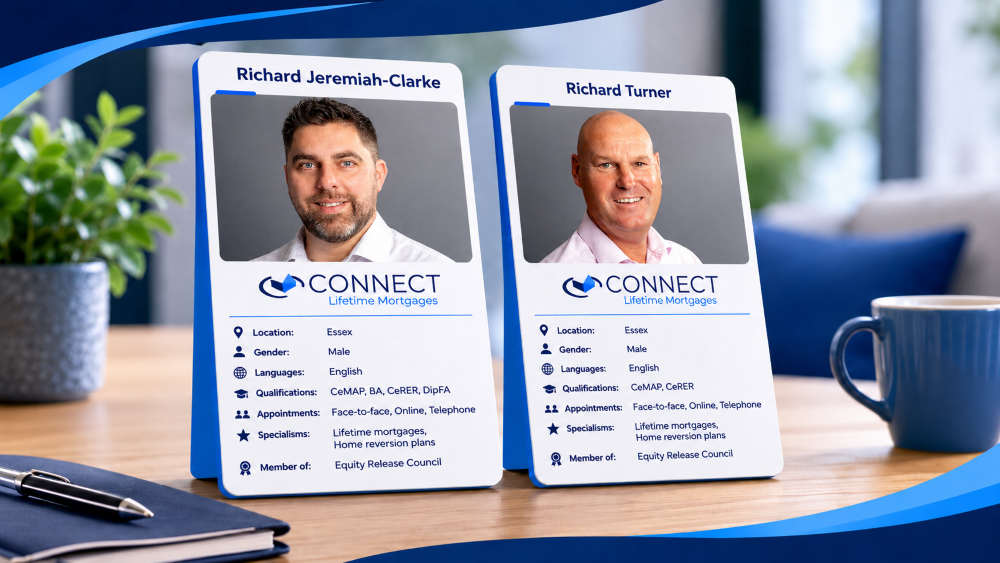
Connect Lifetime Mortgages can help Leigh-on-Sea homeowners assess equity release alongside moving and downsizing plans.
This guide forms part of our wider Equity Release Advisers in Essex series.
Contact Connect Lifetime Mortgages to discuss your circumstances.
Equity release is a long-term commitment. It can reduce your estate and may affect means-tested benefits.